The short answer
Yes, for an ordinary planting pot. It needs drainage holes, and a decorative outer cover must not leave it standing in collected water. A self-watering container uses a reservoir and its own overflow design; follow that design rather than drilling extra holes.
See the sourceIn this guide
Check your situation
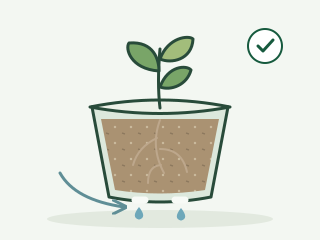
Ordinary planting pot
For an ordinary planting pot, check that its drainage holes are open.
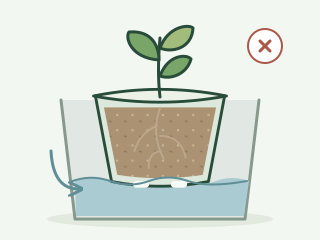
Watch for trapped water
Check whether its base or outer cover blocks water from escaping.
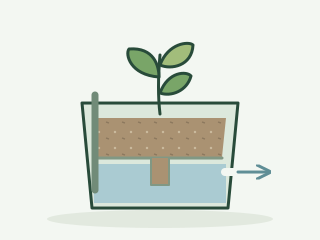
Self-watering container
Follow the reservoir and overflow design; do not drill extra holes.
Diagrams explain the text; they are not to scale.
- This guide covers ordinary planting pots. Check their drainage separately from any decorative outer cover; a self-watering reservoir follows its own design.
What to do now
- For an ordinary planting pot, check that its drainage holes are open.
- Check whether its base or outer cover blocks water from escaping.
- If it stays wet, investigate drainage before adding more water.
What not to do
- For ordinary pots, do not leave them standing in collected water or assume a larger pot will solve persistent wetness.
Do you need to buy anything?
A usable draining pot can sit inside an existing decorative cover. Check that arrangement before replacing everything.
Keep going
Sources behind this page
- RHS: Growing plants in containersUnited Kingdom. Container principles; adapt dates and winter protection to local conditions.Source checked 7 October 2026
- University of Maryland Extension: Growing Vegetables in Containers and Salad TablesMaryland, United States. Container vegetables and herbs; match the mature crop and local climate.Source checked 7 October 2026
We summarise published guidance. We have not independently tested these methods or the products discussed.
AI-assisted editorial check: 7 October 2026. This is a source and clarity check, not a review by a horticultural expert.